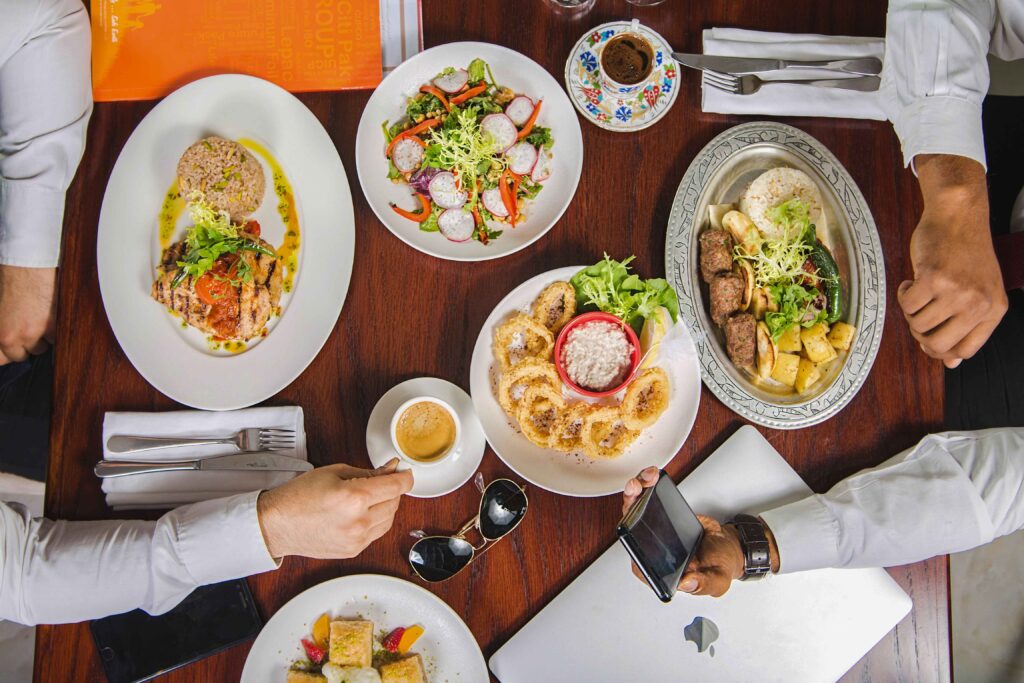

Dubai does not sit still. New things develop, old things disappear and the city goes on without a glance back. New ideas, new people, new things.
But Arabic food? It has stayed.
Not because it is protected or promoted. Because people genuinely want it. And the best Arabic restaurants in Dubai understand that pressure — the expectation to deliver something real in a city full of options.
What the Best Arabic Restaurants in Dubai Are Actually Doing Differently
Most cities water down regional food to make it accessible. Dubai has done some of that too. But the restaurants worth visiting have not followed that path.
Levantine food is not Gulf food. A Damascene kitchen runs on completely different logic than a Kuwaiti one. Different spices, different textures, different ways of building a plate from nothing. The restaurants that know this and actually cook accordingly — stand out immediately.
The food just feels more considered. That is the only way to describe it.
Why Slow Cooking Still Separates Good from Average
Ouzi takes hours. Properly made freekeh needs attention from start to finish. Slow-braised lamb is not something you rush and then plate nicely to distract from the result.
One mistake people make is assuming presentation equals quality. It does not. A beautifully plated dish that was cooked fast will always fall short of something humble that was cooked right.
The restaurants still doing it the slow way are easy to find once you know what to taste for.
Why Some Dishes Deserve More Time
Fatteh is worth talking about here. It is layered, textured, warm underneath and cool on top. Getting it right requires timing and care during assembly. Rush it and the whole thing collapses into something bland.
The restaurants that respect fatteh tend to respect everything else on the menu too. It is a small dish that tells you a lot.
Food memory works like that. You go back to a place because something it served you stayed with you. That is what real regional cooking does — it leaves something behind.
Restaurants That Still Get It Right
Bebek Restaurant is one of those places. Our Arabic menu leans into traditional methods without trying to reinvent everything for the sake of looking modern. The food is straightforward and honest.
In Dubai, that is rarer than it should be.
What Actually Signals a Good Arabic Restaurant
Not every signal is obvious. But these ones are reliable.
| What to Look For | Why It Matters |
| Regional dish names, not generic labels | The kitchen knows where the food comes from |
| Slow-cooked proteins on the menu | They are not cutting corners on time |
| Short, focused menu | Confidence beats variety every time |
| Bread made in-house | Basics done well usually means everything else is too |
A long menu is not always a good sign. Sometimes it just means the kitchen is stretched too thin to do anything well.
FAQs
What are the differences between Arabic cuisine and regular Middle Eastern cuisine?
Arabic cuisine is the name given to dishes based on the cultural traditions of the Arabs, encompassing Levantine, Gulf and North African cuisine. Middle East is more of a general region. The best Arabic restaurants in Dubai are the ones that serve particular regions, not mixing it all up into a single general category.
What are the best Arabic dishes in Dubai to try?
Start with mezze. The mutabbal, kibbeh and warm bread provide you a good idea of how a kitchen works. Then have a slow-cooked dish like ouzi or grilled kofta. If the two courses were just this, you’ll know if the restaurant is worth a second visit.
Are Arabic restaurants in Dubai suitable for group dining?
Most are built for it. Shared plates, long tables, and generous portions are part of how Arabic dining culture works. Many restaurants also offer set menus for groups that cover mezze through to dessert without requiring individual ordering.